
As I watched the world fade away beneath me as I drifted through the air in a basket barely higher then my waste, the ancient ruins of Hierapolis far beneath me, and the snow white calcified travertine terraces spread out over the hillside like a cream white virus, infecting the rich green with its fingers of paper white stone, the only thought to cross my minds was “how did I get here.” This has been a recurring thought of mine during our trip to Turkey. Getting to see with my own eyes the view that people such as Paul, Barnabas, and many other early church figures would have seen with theirs has been nothing short of surreal. Today’s adventures in Turkey where no exception. After our morning hot air balloon ride over Hierapolis, we went back to our hotel for a brief meal before hitting the road to Laodicea. Laodicea is one of the seven churches John writes a letter to in the opening chapters of Revelation. While most of the Churches mentioned in revelation have some positive attributes mentioned, but for Laodicea John seems to have nothing but rebuke.


One of the Joshua staff members, Rylie, walked us through the passage John wrote and explained to us the context of John’s metaphor of hot and cold water. Laodicea, while being one of the most powerful cities in Asia Minor, had a problem, and that problem was water. In order to get water to Laodicea, the Roman’s had to pipe water from extremely far distances. By the time the water reached the city, it was tepid and Lukewarm, neither hot like the hot spring waters of nearby Hierapolis or cold like the fresh mountain water of the equally distanced Colossae. John used this reality as a metaphor in order to rebuke the community of Laodicea for neither being hot or cold, in their faith but lukewarm. Not being good for healing like warm water, or refreshing like cool water but rather tepid and useless like lukewarm water. While this metaphor would have been immediately understood by the recipients of John’s letter, for us the metaphor is lost on us.

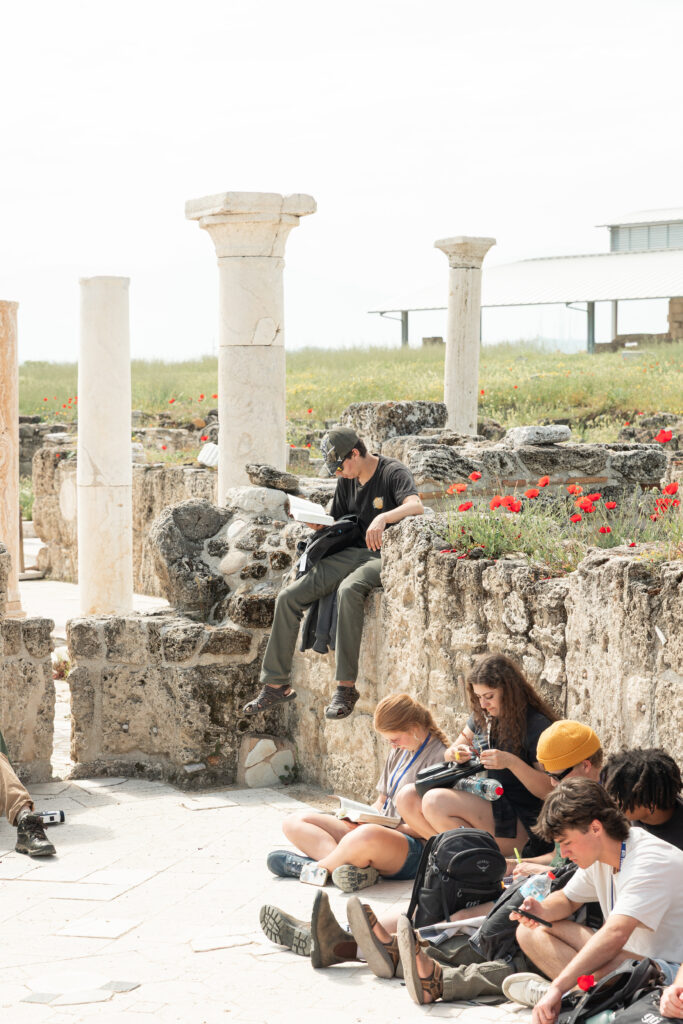
Visiting Laodicea and seeing firsthand why this would have been such a powerful rebuke put this chapter into a context that I simply never would have had otherwise. And this was only our first site of the day. Leaving behind the crumbling ruins of Laodicea, we headed toward the city of Colossae. As our bus rumbled forward toward the grand mountains on the edge of the meandrous valley, a small, tree less hill kept growing larger on the horizon, which we were soon told was the tell of Colossae. Since this city sits on private land, expectations have only really started within the past year, and the entire acroplolis of the city is entirely buried under rock and dirt. With this in mind, our stop at Colossae was not a long one. Our cook Precious read out of the book of Colossians, Sam Myer one of our previous speakers who joined us for the the trip gave a quick talk and we were once again off, stopping briefly for lunch at a wonderful restraunt before continuing to Hieropolis. After seeeing the ancient ruins from the sky this morning we now had the opportunity to see them from the ground.
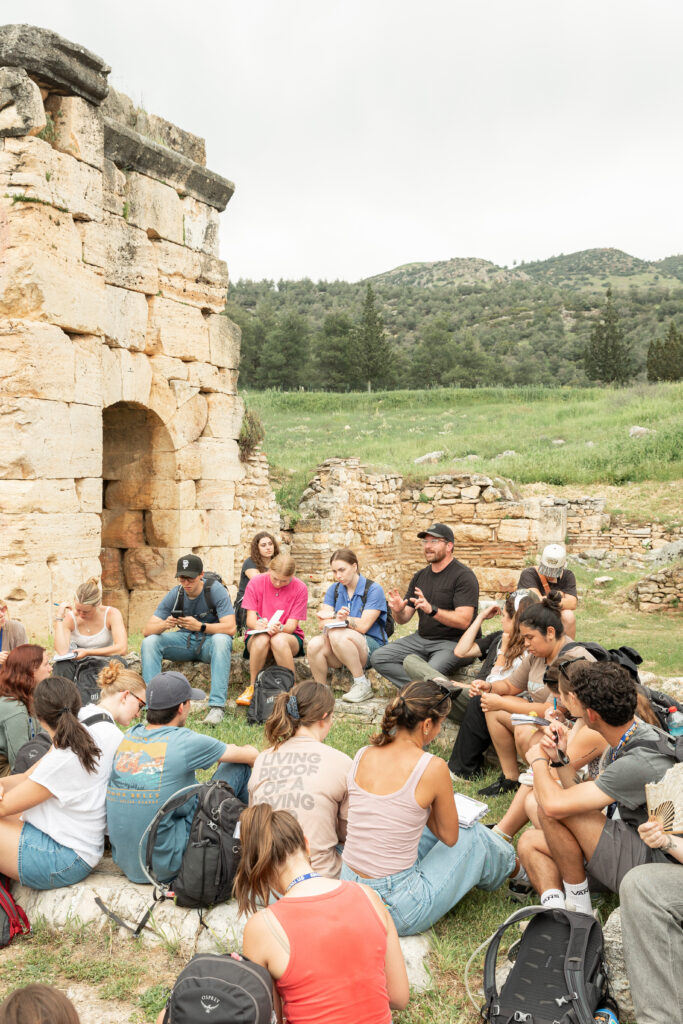

The most striking location for me in this city was Philip the Apostles martiterium. This structure was built to honor the apostle Philip who, according to Church tradition was martyred In Hierapoplis. Our Theology teacher for the Year Evan gave a wonderful talk at this location about legacy, and how Philip’s legacy was not the ruined monument we were standing in but rather the people whom he led to Christ. How we relate to and share Christ with the rest of the world is what will form our true legacy which will last for all of eternity. Evan challenged us to keep our mind on that legacy, and how our faith might ripple for the rest of eternity.
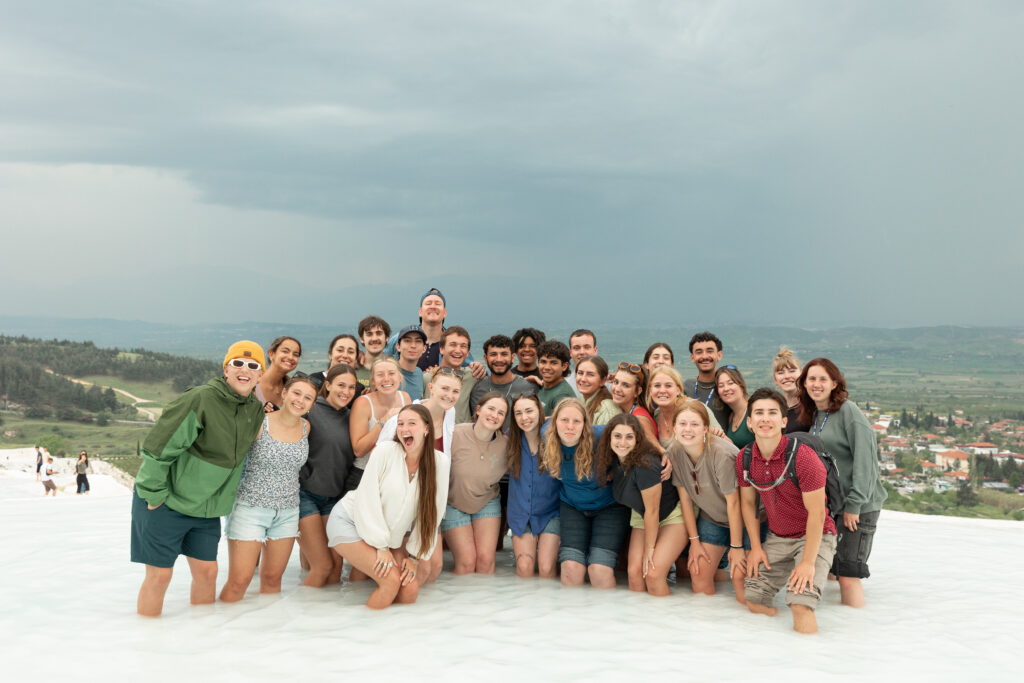
Our day concluded with walking in the travertine terraces. Little pools which had been formed by steady mineral deposits from hot springs throughout the centuries. As we walked through these bright blue and warm pools looking over a bright white hillside and the thunderstorm that was beginning to roll in over the mountains, the same thought I had that morning crossed my mind. “How did I Get here.” And it was accompanied by a second, very similar but slightly different thought. “How lucky am I to be here.” I highly suspect both these thoughts will have a continuous residency in my mind throught out the rest of our Adventures in Turkey.
Brayden (Current Student)